How Do You Compare Acquisition Channels on Time to First Qualified Conversation in 2027?
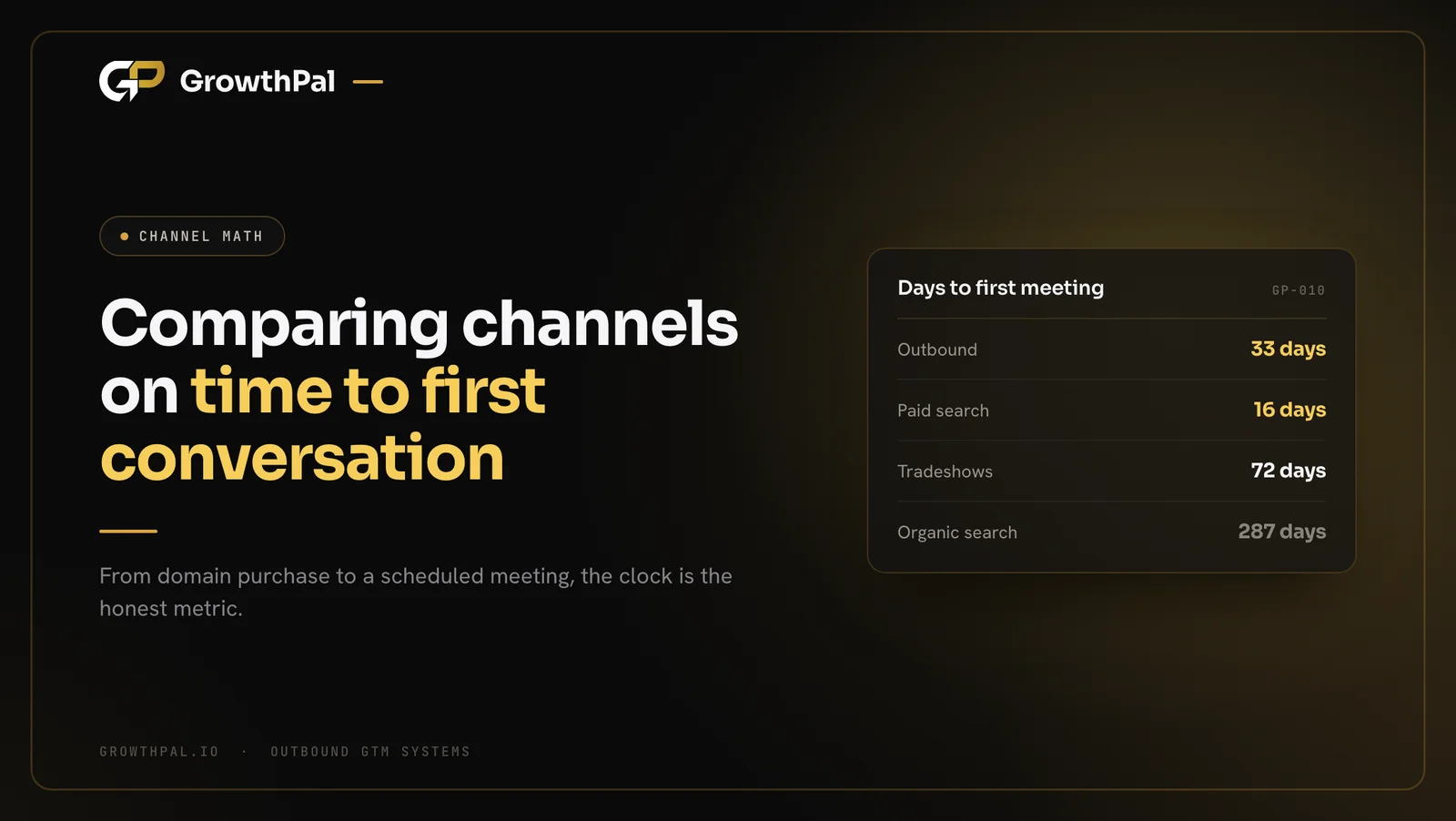
TL;DR Measured from the day you commit budget, paid search can reach a first qualified conversation in about 16 days and a new outbound system in about 33, because outbound needs 2 to 4 weeks to build and warm. Events take about 72 days and organic search close to 300. Choose by when you need pipeline, not by which dashboard looks busiest.
Founders often mistake a simple form fill for a true sales discussion. To plan your cash flow well, you must track the exact channel time to qualified conversation. This guide compares the real days needed across outbound, search, and events to secure a sales-ready meeting.
Key takeaways
- New outbound infrastructure needs 2 to 4 weeks, including warm-up, before campaigns send.
- Paid search can generate a booked meeting in 16 days if configured correctly.
- Tradeshows often take 72 days from sponsorship contract to a held discovery call.
- Organic search averages 287 days to turn a cold contact into a qualified discussion.
- Mailbox providers strictly enforce spam complaint ceilings of 0.30 percent for all senders.
- Outbound message testing requires racing 10 to 15 different angles to find a winner.
How do you define channel time to qualified conversation?
You find this metric by counting the calendar days between spending your first budget and hosting a real sales call. This firm number reveals the true speed of your market growth plan.
Why do leads not equal real conversations?
Many teams count simple form fills as pipeline speed to look good on paper. A whitepaper download is just an early signal of interest. It is not a sales accepted meeting where real budget checks happen.
You must track exact calendar days until a buyer joins a scheduled call. This strict tracking stops false hopes and sets accurate cash flow plans.
How long is the technical setup ramp?
Building a growth system takes time before a prospect ever sees your message. GrowthPal plans 2 to 4 weeks from kickoff to campaigns sending, including 14 to 21 days of inbox warm-up; Reachly's 2026 guide puts the technical ramp at 21 to 30 days.
This crucial phase includes buying secondary domains, fixing email records, and warming new inboxes to support safe sending.
What goes into audience matching and content?
Technical setup is only your first step. Teams must spend a solid week checking lists and learning how we write a cold email angle.
GrowthPal uses a bounce rate calculator and verifies lists with tools like Reoon to keep bounce rates under 2 percent. This careful step protects your sending domains from spam blocks.
How do new email rules impact timelines?
New rules from large inbox providers make outbound setup take much longer today. Google and Yahoo made hard email checks a strict must for bulk senders in 2024.
These platforms strictly enforce spam complaint ceilings of 0.30 percent. You must warm your sending tools very carefully to comply with these rules.
How do you measure cold email vs paid ads conversion time?
Paid search can get you a meeting in just 16 days if you capture high intent traffic. Outbound email takes about 33 days from your start date to the first held chat.
How do you practice setting up secondary domains safely?
Rushing your launch will get your emails blocked fast by automated filters. Setting up secondary domains safely requires using a sending domain generator and tracking tools properly.
Inboxes then warm up for 14 to 21 days with slow traffic limits. Only after this delay can you send live messages safely.
Why does paid search have approval lags?
Paid search skips the inbox warm up but has its own unique delays. Building campaigns, writing ad copy, and making landing pages takes five full days.
Once you launch, the initial click learning phase takes another five days. After this learning period, real buyers start seeing your ads.
How long from launch to booked call?
A well made paid search plan can book a discovery call by day 16. An outbound system typically needs about 33 days for the very first meeting.
Once sequences are live, replies arrive within days; Artemis's 2026 benchmarks put active turnaround at 3 to 7 days. Outbound speed matches paid search once the infrastructure is warm, and our cold email benchmarks cover what to expect after that.
What is the true time to first sales meeting by channel?
Each channel takes a very different amount of time to produce results. Organic content is the slowest path, while paid ads and cold email bring much faster meetings.
What is the true time to first sales meeting by channel?
The true time to first sales meeting by channel averages 16 days for paid search and 33 days for outbound email. Event marketing typically requires 72 days from the sponsorship contract to a qualified discussion. Organic search takes roughly 287 days to yield a fully qualified sales conversation.
Why do events cause pipeline delays?
Event marketing creates a huge time gap between spending money and making pipeline. You usually sign event contracts months early to secure a good booth spot.
Sales follow up takes two more weeks to coordinate busy schedules. This means the real meeting happens 72 days after you commit your cash.
How slow is organic search growth?
Search engine optimisation builds excellent long term value but fails for urgent pipeline needs. A 2026 MOBI Solutions report found an average of 287 days from first touch to a good lead.
If you need pipeline this quarter, compare faster options first; our cold email agency vs in-house SDR guide sets out two of them.
What is the outbound execution timeline?
Launching an outbound system follows a strict schedule that you can map clearly. You spend 24 days building the tools and warming your inboxes properly.
By day 28, you sort your ideal buyer profile and send your first copy. This steady daily work leads to a discovery meeting on day 33.
How does a B2B sales cycle channel comparison help?
This comparison helps founders match their cash flow with their desired growth timeline. You must pick channels based on how fast they can prove your core offer works.
How do you validate market fit fast?
Founders want to know the fastest way to test an offer with real buyers. Cold email wins here because you can target exact job titles right away.
For GrowthPal client Wattstor, the first day of sending produced a meeting with the CEO of a billion-dollar company. Feedback that fast tells you within days whether an offer lands, before you commit budget elsewhere.
How should you balance short and slow channels?
Using just one growth method creates bad revenue traps for your business. You should fund slow channels like SEO with cash from fast methods like outbound.
You should check a cold email agency vs software review to pick your fast tools and secure your pipeline.
Does deal size change your velocity?
Your average deal size changes how long it takes to land a meeting. Large software deals over $100,000 involve buying committees and often take longer than 90 days to reach a qualified conversation with every stakeholder.
Lower-priced products with a single decision maker move much faster once outbound is warm.
Which are the fastest B2B pipeline channels available?
You find the fastest channels by checking the setup time against the delivery speed. Paid search and outbound email give the quickest path to a real sales chat.
How do channels compare on delivery speed?
| Channel | Setup Time | Days to First Meeting | Best Use Case |
|---|---|---|---|
| Paid Search | 5 Days | 16 Days | Catching high intent search terms |
| Cold Outbound | 24 Days | 33 Days | Targeting exact B2B buyer profiles |
| Event Marketing | 60 Days | 72 Days | Building large enterprise trust |
| Organic Search | 180+ Days | 287 Days | Growing slow long term pipeline |
This table shows the true days passed from project start to a booked sales chat. Outbound takes more setup time but brings highly targeted talks on a clear schedule.
Why does outbound agility beat waiting?
Paid ads are fast, but outbound gives better targeting for exact buyers. A team with secondary domains already warmed can skip most of the ramp and reach a first meeting much sooner.
You do not have to wait for search algorithms to adapt. You just change your email angles immediately.
Why is avoiding mailbox provider throttling important?
Sending too many emails too fast will trigger spam filters. Avoiding mailbox provider throttling is crucial, as Google Workspace notes from 2026 state senders must keep complaints under 0.10 percent.
You can use an inbox calculator to plan your safe daily sending limits exactly.
How do you find a winning cold angle?
Finding a message that converts requires a strict testing plan to reach cold email message market fit. We test 10 to 15 varied angles at once across the whole market.
A winning message is often found by week eight. We aim for one good lead per 350 contacts.
Outbound Services
We build and run full-TAM outbound systems to find your message-market fit. GrowthPal handles the infrastructure, enrichment logic, and routing rules to generate predictable B2B pipeline.
View Our Outbound System Process →
What are the best methods for accelerating B2B customer conversations?
Speeding up talks means removing blocks between a buyer showing interest and booking a call. You must fix data flows and build backup tools to stop pipeline stalls.
Why should you audit revenue operations first?
Before you speed up any channel, you must know exactly where your leads start. We start every operations project by checking where data comes from, where it goes, and who owns it.
We check if the data is right before building anything. Clean data ensures your team calls immediately.
How do you fix inbound form delays?
Paid search leads often miss calls because of a slow sales follow up process. You can fix this delay by adding a calendar link right on your thank you page.
If you are weighing who should run your outbound, our cold email agency alternatives page compares the options.
Why is over-provisioning inboxes by 50 to 100 percent vital?
Outbound campaigns pause badly when one set of sending emails burns out unexpectedly. Over-provisioning inboxes by 50 to 100 percent acts as a vital backup layer.
If one inbox gets blocked, the backup tools take over the work smoothly. You never miss a single sending day.
How do you track channel time to qualified conversation objectively?
Tracking your b2b acquisition channel velocity well means setting strict rules for when a project actually starts. You must separate the setup phase from the live sending phase to see true results.
Why is instrumenting CRM milestones correctly so important?
Most sales teams lack the technical skills to track channel speed well. Setting CRM milestones correctly means picking specific dates for when a campaign starts and when the meeting happens.
Clean CRM tracking stops arguments between marketing and sales teams and keeps everyone focused.
When does the true project clock start?
Many marketing agencies hide setup delays by only tracking metrics from the first sending day. You must track the time from the day you sign the deal.
The clock starts when budget is committed, whether that is media spend, an event contract or an agency fee. Accurate tracking helps plan financial runway.
Why must you filter out low intent vanity metrics?
If you count every simple webinar sign up as a chat, your speed numbers will look fake. You must filter out low intent vanity metrics to see real speed.
A real conversation only happens when a sales rep holds a two way talk with a buyer.
How do border rules affect compliance?
Legal rules directly change how fast you can start talking in different regions. The UK Information Commissioner's Office lets you email corporate staff without prior consent if you give an opt out.
Strict opt in rules in Germany will slow down European growth plans.
How do you choose your ideal acquisition channel?
Picking the best channel depends largely on your budget and your target audience size. You must check your total addressable market before you commit to a specific path.
How do you assess your addressable market?
The size of your target audience decides which channel will work best for you. The ideal market size for outbound is 30,000 or more reachable contacts.
Firms with fewer contacts can still win, but total pipeline growth will be slower. Get a free plan early to check your market size.
When is it time to kill a channel?
Founders often waste money for months on channels that simply will not convert. If an active outbound push gets zero interested replies after eight weeks of hard testing, you should pause.
You must stop failing tests quickly to save your remaining marketing cash. Fast cuts keep your business lean.
How do buyer habits dictate your choice?
Your prospects decide the best channel based on where they spend their work day. If your buyers open their email inbox every day, cold email can reach them; if they rarely do, choose a channel that meets them where they work.
You should always match your growth plan to the daily habits of your buyers.
What are the 10 steps to launch fast?
- Define your ideal customer profile clearly.
- Audit your current revenue operations data.
- Buy your secondary domains for cold outreach.
- Set up your DNS records properly.
- Warm your new mailboxes for 21 days.
- Scrape and check your prospect email lists.
- Draft 10 to 15 different message angles.
- Launch your first testing campaigns slowly.
- Watch your spam complaint rates daily.
- Scale the winning message to your market.
Free GTM Plan
Get a custom mapped market, buyer breakdown, 5 tailored message angles, and 5 distinct signal plays delivered to you within an hour. This helps you validate your audience size before spending a penny.